The Musée des sciences de la Terre invites the public to a series of five lectures on Mondays January 26, February 2, 9, 16 and 23, 2026 at 7.30pm in the Salle du Vampire.
The Musée des sciences de la Terre is offering a series of five lectures, to be held on Mondays January 26 and February 2, 9, 16 and 23, 2026 at 7.30pm, in the Salle du Vampire, 1st floor, rue des Petits-Epineys 7.
26.01.2026: Lithotherapy by Mr. Vincent Lugon-Moulin.
This lecture presents an innovative approach to lithotherapy, based on quantum physics and the theory of electromagnetic radiation. Far from traditional interpretations, this presentation explores how stones and crystals can truly influence everyday well-being, bringing a more coherent and scientific vision to this age-old practice.
02.02.2026: The problem of rockfalls in Mt-Chemin in connection with climate change by Christine Moos.
A study is looking at the evolution of the risk of rockfalls on Mont-Chemin in relation to climate change. Today, the forests of the massif play an essential protective role for the commune of Martigny. However, the application of modelling tools shows that this protective function could diminish in the future, due to the effects of climate on the composition and vitality of forest stands. These projections underline the need to adapt forest management in order to limit the increase in natural risks.
09.02.2026: Birds and agriculture: 25 years of commitment on the Rhône plain… by Mr. Emmanuel Revaz.
For 25 years, the Valais branch of the Swiss Ornithological Institute has been working to help birds on the agricultural plain of the Rhône. This commitment has taken various forms over time, in the context of a constantly evolving agricultural policy. Since 2014, the establishment of ecological networks has provided a framework conducive to the development of concrete measures, particularly in the Chablais region, where sometimes innovative actions are creating new prospects for safeguarding birds. In the central Valais region, more recent programs have also opened doors to the promotion of biodiversity in fruit growing. All these projects have a common denominator: close collaboration with farmers, whose involvement is the real key to success.
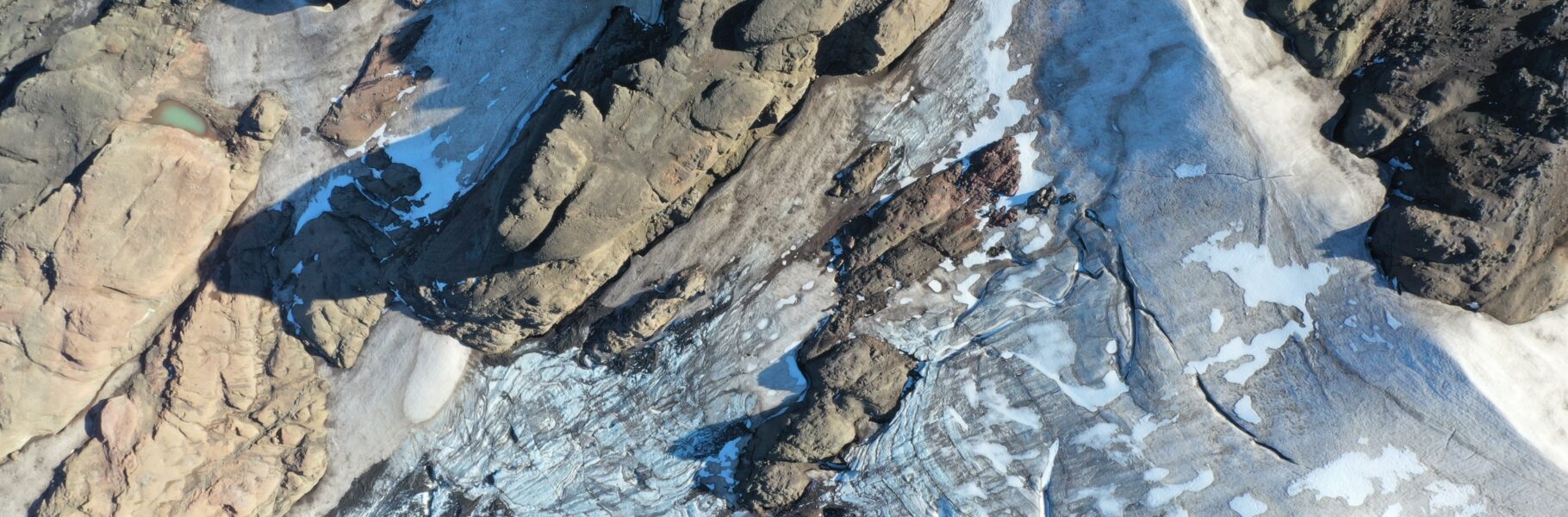
16.02.2026: Risks and natural hazards of glacier melt in Valais by Saskia Gindraux.
The rapid retreat of Valais’s glaciers is profoundly altering the regional balance. The melting of glaciers affects water availability, natural hazards, landscapes, biodiversity and human activities such as agriculture, hydroelectricity and tourism. The aim of the conference is to analyze these transformations at different scales, and to consider ways of adapting to this inevitable phenomenon.
02.23.2026: Health and beliefs: a journey through 18th-century Valais by Madeline Favre.
In the 18th century, illness played a central role in everyday life in the Valais. In Martigny, healing practices blended domestic remedies, religious devotion and learned medicine. The Bâtiaz chapel and the figure of doctor Jean-Baptiste Claret illustrate this cohabitation of beliefs and knowledge in a context where religion and science came together.
For further information, please contact the Musée des Sciences de la Terre.
©SciencesdelaTerre : Saskia Gindraux